

Hyponatremia:
Wading into Muddy Waters.

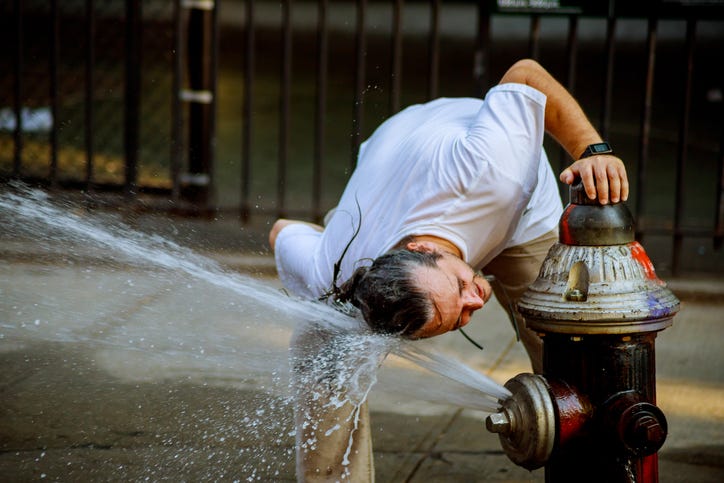
So, you signed up to race the Western States 100 miler. Or maybe just the local 25-mile mountain or gravel bike race that’s going to take 3-4 hours due to the 5000 ft. elevation gain. What do you need to know about hydration in these hot and lengthy events? Given the record heat waves, it’s a good time to refresh on hydration guidelines as well as what can be too much hydration (hyponatremia).
If you take part in extended outdoor endeavors or races, hyponatremia should be on your radar. Mountaineers at high altitude, endurance athletes as well as relatively passive participants on a Grand Canyon River trip can all get hyponatremia.
Hyponatremia is an excess of water in the body from overhydrating. This excess of water collects in the brain as well as the body. In the case of your brain though, because your hard skull so completely surrounds the brain, it’s sort of akin to injecting water into an egg shell - the pressure is all inward on the gelatinous brain, wreaking all sorts of havoc. (The water goes into our legs too, but that just ends up in impressive sock indentations….)
Drinking too much of anything, even water or Gatorade, is never great for one’s equilibrium.
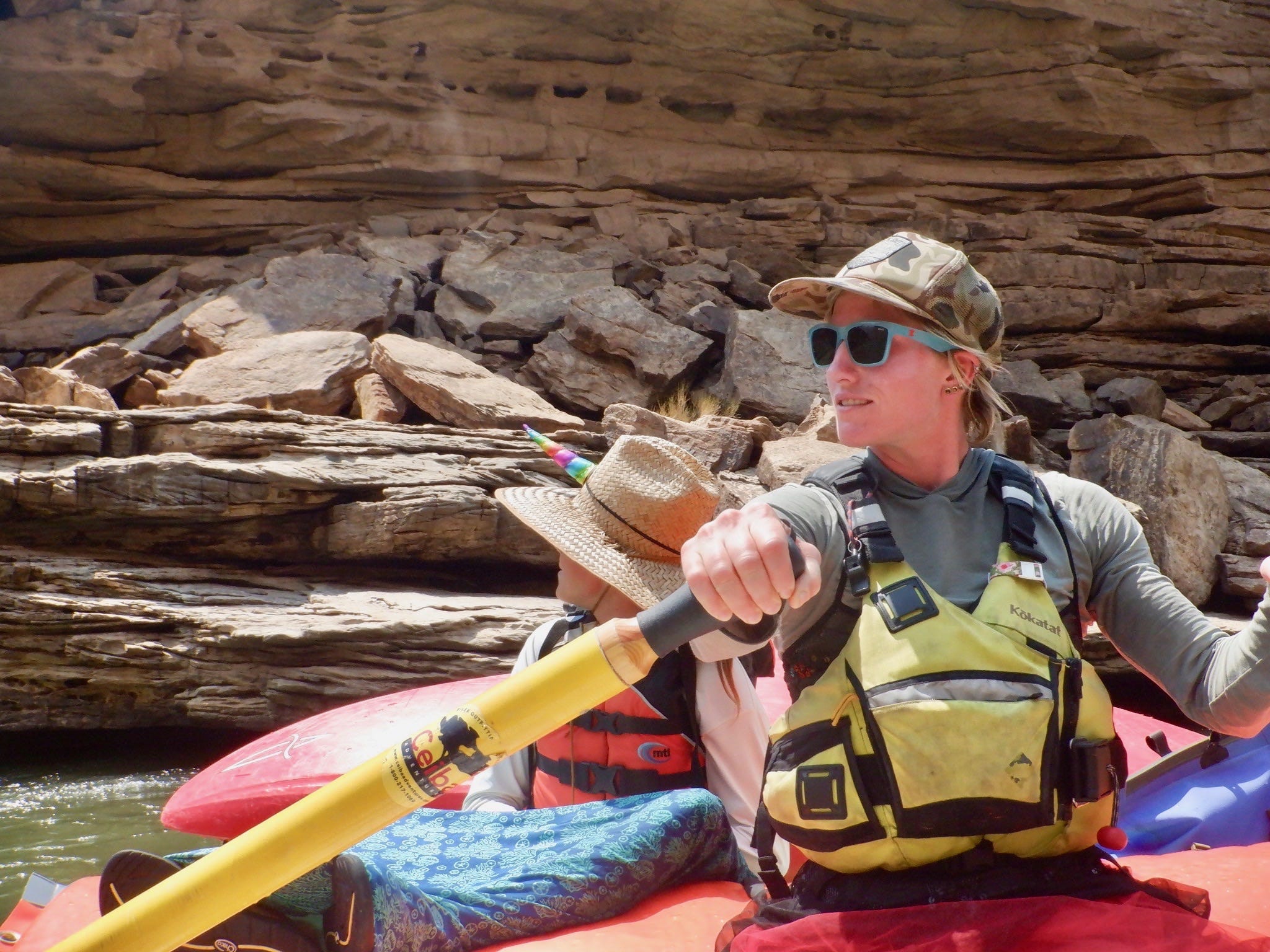
The Big Picture: In the Grand Canyon, evacuations are nearly equal for heat illness versus hyponatremia. One 6-year study during 2004-2009 indicated that of nonfatal heat-related illness cases, 25% were dehydration, 23% heat exhaustion and 19% were suspected hyponatremia. 1
There was a time when tourists in the canyon as well as endurance sports participants were encouraged to drink as much water as possible to prevent dehydration and heat illness. Little guidance was given to the actual volume of water and/or salt intake. Not much was known about hyponatremia in the context of endurance exercise, it was mostly the purview of nephrologists and ICU nurses and doctors. Now it has been studied enough to have its own category and is referred to as exercise-associated hyponatremia, or EAH.
The Numbers: One study showed 67% of ultramarathon runners had exercise-induced hyponatremia.2 Another study in the 2020 Boston Marathon demonstrated 13% had exercise-induced hyponatremia with 0.6% critically sick.3 That’s 1,900 of the 15,000 finishers with mild or non-symptomatic exercise-induced hyponatremia, with 90 having critical illness. One case study presented 3 women who had developed hyponatremia within 24 hours of each other on the same Grand Canyon pontoon raft trip.4 They were passive participants on the trip and had been overhydrating due to concerns about dehydration. All 3 of these participants went quickly from feeling “fatigue, weakness, feeling of fullness” and vomiting to a rapid onset of unresponsiveness. All of this is scary, but only a very small percentage of folks with measurable exercise-associated hyponatremia develop any notable symptoms. (EAH is detectable with a blood test before people have outward signs and symptoms)
One doesn’t always need to be exercising, just overhydrating. That’s why folks die by drinking too much water when taking Ecstasy. Ecstasy stimulates the production of the same anti-diuretic hormone (think “anti-urination hormone”) that causes retention of lots of fluid.
The common denominator among the Boston Marathon case studies and the Grand Canyon folks is not frequent urination. Many wilderness medicine instruction curricula and textbooks confuse the issue - frequently citing excessive urination as the defining diagnostic feature to distinguish hyponatremia from dehydration. The reality is that many folks with exercise-induced hyponatremia won’t urinate much or at all because of an excessive or inappropriate production of the anti-diuretic hormone that inhibits urination.
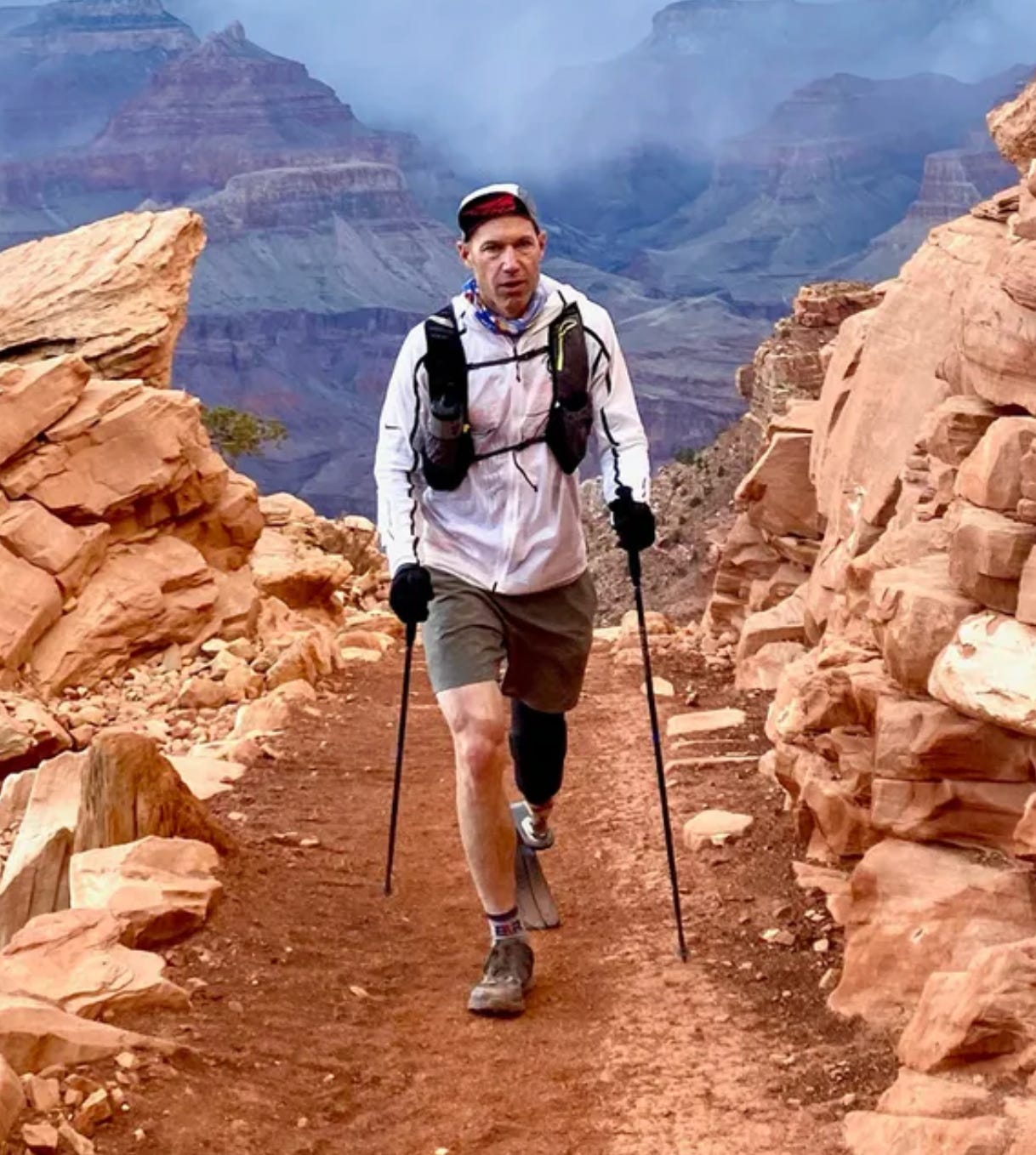
Photo credit: Bobby Africa.
Anti-diuretic hormones cause excessive water retention in the body and don’t allow the body to compensate as well for drinking too much fluid. How much or frequently someone is urinating is not a reliable diagnostic factor to differentiate hyponatremia from dehydration.
To make matters worse for folks exercising outside for long periods, this anti-diuretic production is thought to be increased as air temperature increases, workload increases and with certain medications - Ibuprofen being among them - as well as when someone has low blood sugar.5 This is clearly problematic for ultra endurance athletes and others out for long periods.
What these racers, hikers and rafters have in common is overhydration. Even if one has enough salt in their water, it cannot correct for overhydration during activity as a way of prevention for hyponatremia.6
The default diagnosis to the vague and non-specific symptoms that dehydration and hyponatremia share – fatigue, weakness, headache and vomiting - is often dehydration. It’s ingrained in us – it just seems likely that when exercising in the heat someone is probably dehydrated. The key is to get a detailed history of how much water someone has had over what timeframe – in other words, how much water per hour and how much salt per hour.
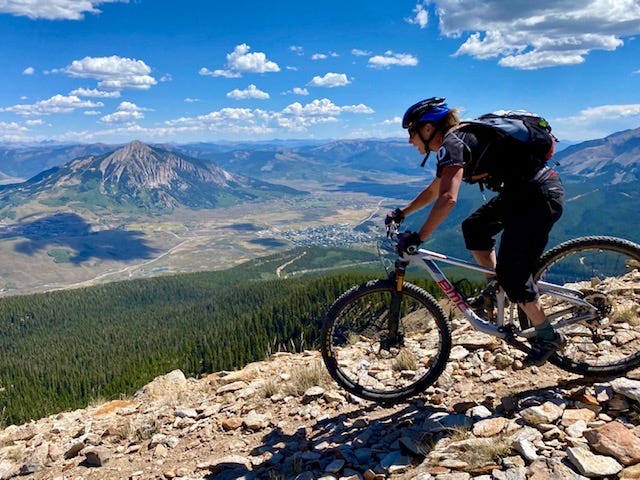
Photo credit: Sue King

Guidelines for fluid and salt intake:
1. Drink only when thirsty.
2. Sodium cannot correct for overhydration during activity. What this means is a person can still develop hyponatremia if they have salt and electrolytes in their water if they drink too much of it.
3. The Water Part: The maximum amount of fluid most people’s kidney and small intestines can absorb and process is around 800-1000 ml water per hour. Any more than that starts one down the road of overhydration. However, all bets are that volume is for an average sized male. So, a smaller person cannot likely handle that amount. Currently, the Wilderness Medical Society gives a guideline of 400-800 ml per hour - think small and large bike water bottles roughly - if a guideline for water intake must be given while doing heavy and extended exertion7
4. The Salt Part. On average, most folks need around 350-450 mg sodium per hour.8 You can get a salt sodium test to find out what your needs are. These are highly variable. A friend and I once had this done before an endurance race and he came out at 1200 mg and I was 400 mg. He was the kind of person who has streaks of white salt down his face after exercising for a couple of hours. Most electrolyte mixes, drinks and gels do not have near this much salt ratio.
If your patient evaluation shows the person has been drinking a lot of water or fluid – over a liter or more per hour and they have these signs of possible hyponatremia:
· Lethargy
· Nausea
· Vomiting
· Headache
· Feeling of fullness
· Weight gain during or 24 hours after the event
· Confusion
· Not interacting appropriately/altered mental status
· Seizure
· Unconsciousness
Then it would be reasonable to start the following treatment before things get worse. Many of these symptoms are what is known as “non-specific”. This means they are common to many illnesses and environmental problems as well. Try to rule out other potential issues.

Treatment
1. Conscious patients with suspected hyponatremia are recommended to receive a mix of 2 bouillon cubes in ½ cup of water. Roughly 1500-2000 mg. sodium. (Even more reason not to let this happen to you.) For reference, an average full-size 8 oz. bag of Kettle potato chips has around 1000 mg. sodium. People with symptomatic hyponatremia need a lot of salt. Most commercial rehydration drinks and mixes don’t have enough salt in them to treat hyponatremia and at this point we don’t want to give more fluid.
2. These patients should not drink further fluid until they spontaneously urinate. Only intake of the salty stuff – bouillon or food or other commercial salt products with similar amounts of sodium.
3. Patients with an altered mental status who are not interacting appropriately need IV hypertonic fluid (100 ml of 3% saline every 10 minutes), not 0.9 Normal Saline IV fluid or Lactated Ringers. Giving normal saline IV fluid without a serum sodium level when hyponatremia is suspected will escort the patient that much closer to death. Hypertonic fluid is not always carried on Advanced Life Support transport. Clarify suspicions that it is hyponatremia and ask for it. Severe hyponatremia warrants air flight evacuation.
4. Suspected mild hyponatremia in a person who is interacting appropriately is often reversible and stable in the field with the treatment in #1 and #2.
5. Hyponatremia risk can increase post-exercise. The GI tract still has water in it that is being absorbed, but the kidneys are still not able to excrete that water due to the anti-diuretic hormone present, so water continues to be retained in the brain and body.

All three of the women in the Grand Canyon case study did well, despite having seizures and lapsing into unconsciousness initially. However, severe hyponatremia, while rare in its severe form, can be as deadly as heatstroke.
Stay safe out there. Don’t drink water at every aid station necessarily, but, always have some with you in case of potential dehydration, overheating, and uncooperative expected field water sources in this year of low water.
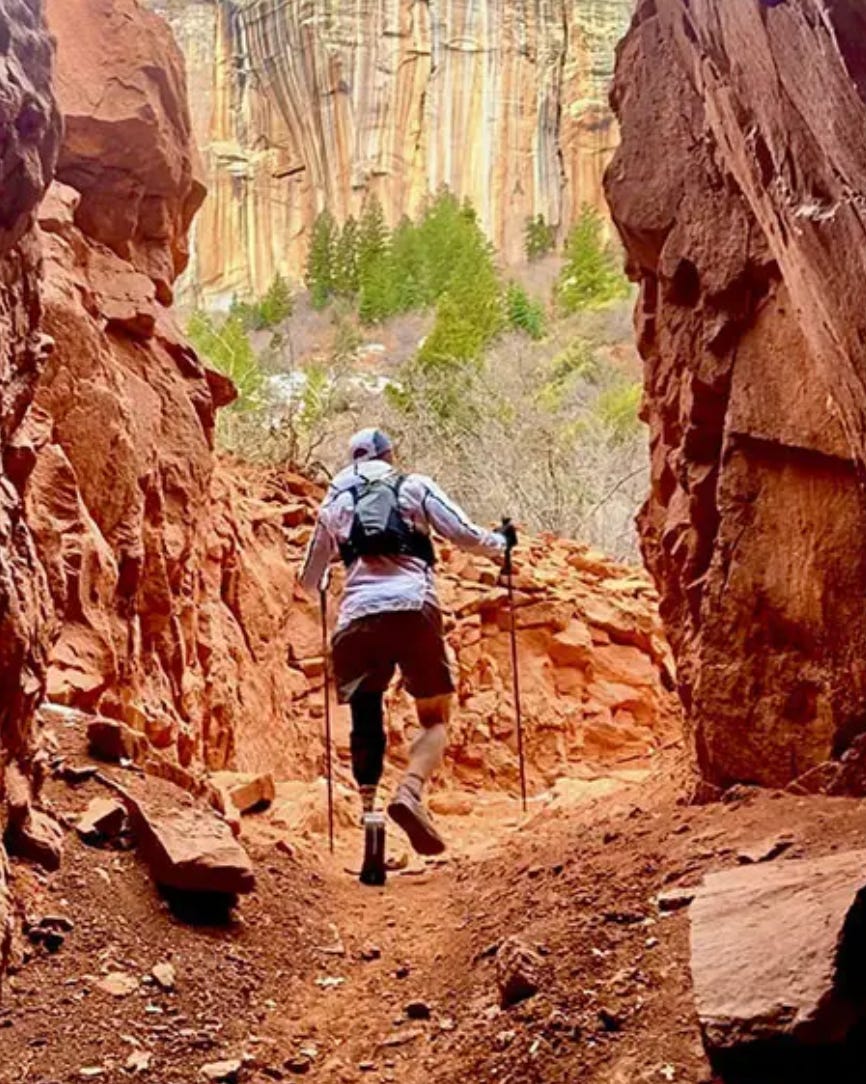
Photo credit: Bobby Africa

This post is a public service - no paywalls, no paid subscription requests, athough if you feel so inclined I thank you! If you found it useful, please consider purchasing the Wilderness Medicine Reference App - for your friends, children and backcountry partners who might have to revive you in your next 5 hour race….


References:
1. Rosner M, Myers T, Hew-Butler t, et al. Exercise Associated Hyponatremia in the Grand Canyon. Preventing Fatalities through Early Recognition. Clin J Am Soc Nephrol 2023; 12 (5) doi: 10.2215/CJN.0000000000000402
2. Hew-Butler T, Pani A, Loi V, et al. Exercise Associated Hyponatremia: 2017 Update. Front. Med, Nephrology. March 2017. https://doi.org/10.3389/fmed.2017.000
3. Almond CS MD, Shin AY MD, Fortescue EB MD et al. Hyponatremia Among Runners in the Boston Marathon. N Engl J Med 2005; 352.
4. Pearce E, Myers T, Hoffman M, Three Cases of Severe Hyponatremia During a River Run in Grand Canyon National Park. Wilderness Medical Society; 26 (2) https://doi.org/10.1016/j.wem.2014.08.007
5. Pearce E. Three Cases of Severe Hyponatremia During a River Run in Grand Canyon National Park.
6. Almond CS Hyponatremia Among Runners in the Boston Marathon.
7. Pearce E. Three Cases of Severe Hyponatremia During a River Run in Grand Canyon National Park.
8. Griffin, D MS RSN; The Nutrition Mechanic
Any information contained in this post is for informational purposes only and does not supersede your own programmatic physician advisor or personal physician advice or protocols. Please consult with such with any medical practice questions.